

INCREASING AWARENESS OF WASTE SORTING THROUGH THE PROVISION OF FACILITIES AND COMMUNITY-BASED EDUCATION IN MANDIRANCAN VILLAGE
Bilah Samping Artikel
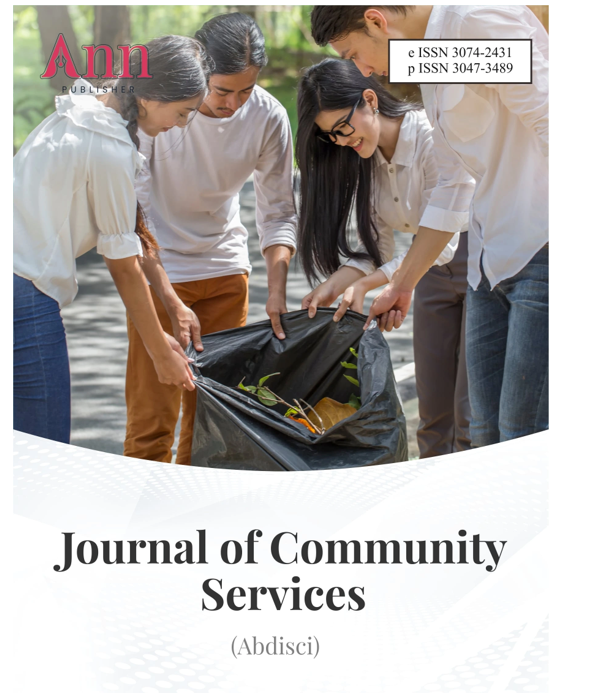
Isi Artikel Utama
Abstrak
Background: Waste management problems still become a challenge in the community, especially due to low awareness of waste sorting. In Mandirancan Village, most of the community still mixes organic and inorganic waste and has not utilized the inorganic waste that has economic value.
Aim: This research aims to increase community awareness of waste sorting by providing inorganic waste bin facilities and accompanying community-based education.
Methods: This activity used a Participatory Action Research (PAR) approach, with data collection techniques including observation, interviews, and documentation of 20 respondents. The activity stages included coordination, construction of waste bins, socialization, and evaluation of facility utilization.
Results: The results showed an increase in several indicators, namely waste sorting practices from 12% to 48%, community understanding of waste types from 25% to 68%, and the utilization of waste bin facilities from 8% to 52%, based on the results of observation and interviews
Conclusion: The program for the provision of inorganic waste bins accompanied by education is proven to improve community understanding and behavior in waste management, although the changes that occurred are not yet evenly distributed and still require a process of habituation
Implication: Further efforts are needed, including ongoing education, community assistance, and the development of a community-based waste management system, to ensure behavior changes are consistent and sustainable.
Rincian Artikel

Artikel ini berlisensi Creative Commons Attribution 4.0 International License.
Referensi
Kementerian Lingkungan Hidup dan Kehutanan. (2025). Sistem Informasi Pengelolaan Sampah Nasional (SIPSN). Retrieved from https://portal-sipsn.kemenlh.go.id/
Muyasaroh, S. (2025). Tinjauan metode pengolahan sampah organik skala rumah tangga di Indonesia. Journal of Environmental Engineering and Hygiene, 3(2), 120-136.
Sya'bani, N. L., Saktiawan, Y., & Wahyuni, I. D. (2024). Pengaruh pengelolaan sampah reduce-recycle terhadap pengurangan volume sampah menuju TPA di TPS3R Mitra Patemon. Jurnal Kesehatan Tambusai, 5(3), 8856–8867.
Kementerian Koordinator Infrastruktur dan Pembangunan Kewilayahan. (2021). Pengelolaan sampah pada Bank Sampah. Retrieved from https://jdih.kemenkoinfra.go.id/id/pengelolaan-sampah-pada-bank-sampah
Asteria, D., & Heruman, H. (2016). Bank sampah sebagai alternatif strategi pengelolaan sampah berbasis masyarakat di Tasikmalaya. Jurnal Manusia dan Lingkungan, 23(1), 136–141.
Windraswara, R., & Prihastuti, D. A. B. (2017). Analisis potensi reduksi sampah rumah tangga untuk peningkatan kualitas kesehatan lingkungan. Unnes Journal of Public Health, 6(2), 123-130.
Febriadi, I. (2019). Pemanfaatan sampah organik dan anorganik untuk mendukung go green concept di sekolah. Papua Journal of Community Service, 1(1), 32-39.
Yusra, H., Gusmarta, M., D., Karoba, A., Ristiana, N. A., Aulia, A. M., Fath, A. F., & Abrar, M. R. (2024). Sosialisasi pemilahan sampah organik dan anorganik pada siswa SDN 124/VI Koto Baru. Jurnal Pengembangan dan Pengabdian Masyarakat, 3(2), 99-109.
Sari, J. M., Nababan, A. I., Tarihoran, E. R., Akhbar, B., & Adepio, M. I. (2025). Transformasi sampah menjadi aset: Pemilahan sampah organik-anorganik berbasis tabungan emas melalui sinergi bank sampah dan pegadaian. Jurnal Pengabdian kepada Masyarakat Universitas Bangka Belitung, 1(1), 36-42.
Mandira, I. M. C., Wijaya, K., Devia, F., Pramadiyani, A., & Sapta, D. (2024). Pemilahan sampah organik dan anorganik dilakukan melalui sosialisasi guna meminimalisir penumpukan sampah. Jurnal Dinamika Pengabdian, 10(1), 27-33.
Geissdoerfer, M., Savaget, P., Bocken, N. M. P., & Hultink, E. J. (2017). The circular economy: A new sustainability paradigm. Journal of Cleaner Production, 143, 757–768.
Wang, J., Shao, J., Zhang, S., Wang, L., & Zhang, L. (2025). Comprehending health behavior change and maintenance: A systematic review and meta-synthesis of behavior theories. American Journal of Health Education, 56(2), 119–133.